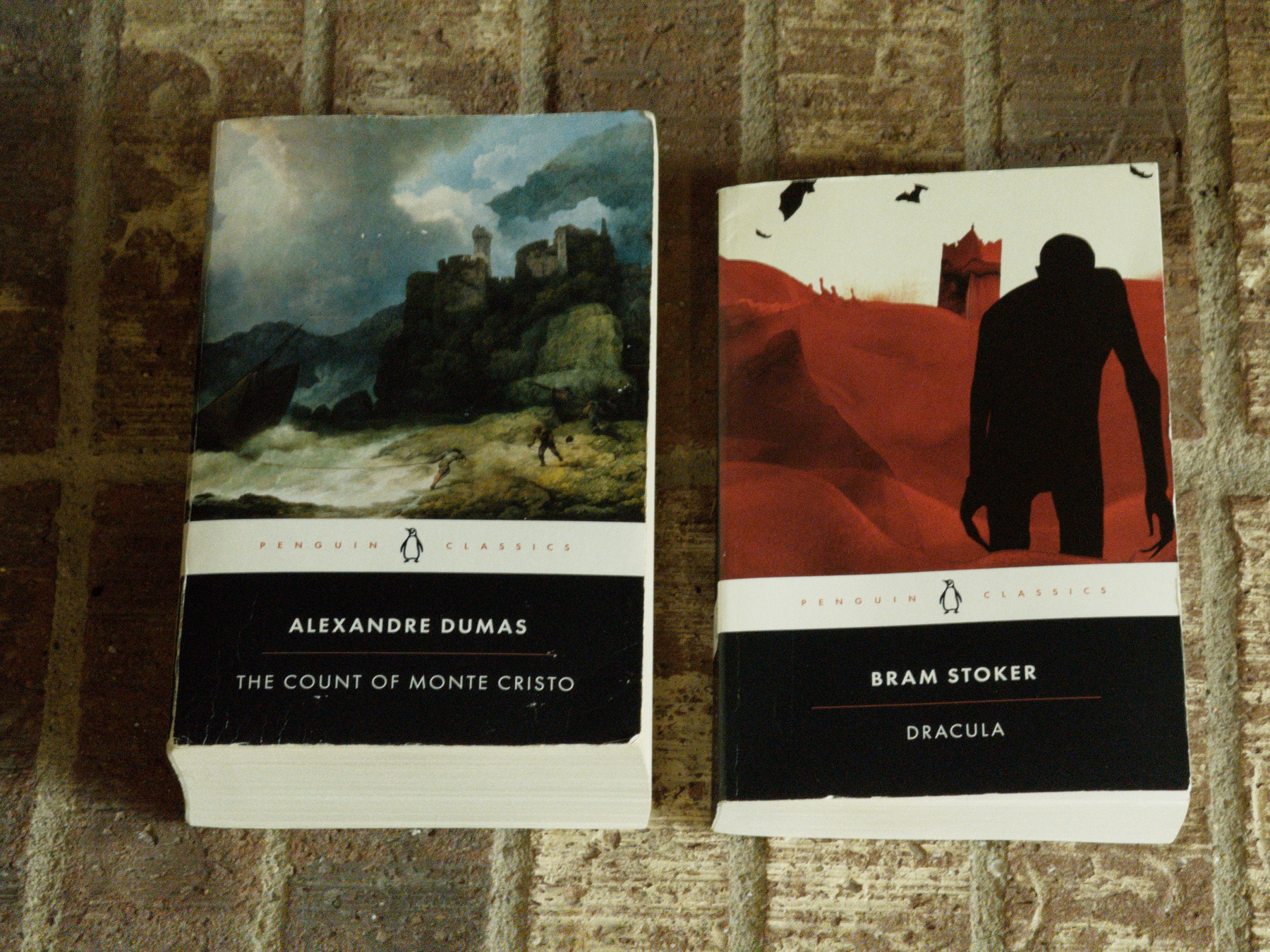
This year, I nose-dived into two novels written at opposing ends of the 19th century: The Count of Monte Cristo (1844-46, Alexandre Dumas), and Dracula (1897, Bram Stoker). It was by pure chance both of these novels were fixated, in their own ways, on two titular individuals that have become renowned, over time, as mythical figures.
I liked them both, but Monte Cristo is the superior (and more enjoyable) read. Dumas weaves such an extraordinary and feel-good tale, that the more subdued extremes of Stoker’s exercise in repressed sexual brooding feel leagues away. But they both myth-make in a supreme literary way: through restraint and external perspectives.
Both novels begin in haste, and then slow to build the world and climate around the hero and antagonist(s). Throughout, they share some very potent characteristics and plot threading, notably:
- The mysterious aristocrat entering and navigating society
- The contrasting drives of revenge vs appetite
- Ancillary characters’ observations (in-chapter vs via written media)
These driving factors craft a restraint upon the pacing of the novels, whereas we are introduced to these massive fixtures of literature and culture (as a reader, in retrospect, of course), and then taken aside to ride witness to their affect and aura on others as the story unfolds.
I’m not sure if the external-to-protagonist narratives were common in the 1800s, but they work well to conjure images of each Count through indirect extrapolation. In the medium of literature, this is imagination candy for the reader. And while Dumas does indulge in his protagonist’s introspection later on, it’s with calculation to doubt his revenge tale; mostly, the bulk of the novel (and all of Dracula) are left in the hands of others directly or tangentially involved in that character’s arc.
Both leave a lingering impression, especially with a hundred years hindsight and plenty of cultural context, but I admit feeling disappointed in Dracula’s lack of a denouement. The Count of Monte Cristo is a blockbuster classic, and it’s so hard to fault it for what it set out to accomplish. Dracula has grander psychological inquiries that still haunt today, but Stoker could have learned a thing or two about dramatic closure from Dumas.
Anyway, if you’re going to read two books from the 19th century, these might as well be at the top of your list.